Carriage Engineering & Panoramic Sightlines
The signature feature of modern Swiss scenic trains—most notably the Glacier Express and the Bernina Express operated jointly by the Rhaetian Railway (RhB) and the Matterhorn Gotthard Bahn (MGB)—is the oversized panoramic coach. Engineered with wrap-around glass panels that extend into the roofline curved cantrail, these coaches maximize vertical sightlines, allowing passengers to observe cliff walls and glaciated peaks that would normally be clipped by conventional train window lintels.
However, panoramic glazing introduces specific physical considerations that travelers must navigate. The expansive curved glass panels do not open, meaning internal cabin reflections can impair photography when external sunlight strikes the glass at oblique angles. Contrast levels between shaded river gorges (such as the Ruinaulta / Rhine Gorge) and bright snow-covered peaks require careful consideration. Standard regional trains running on the exact same tracks often feature lowerable rectangular drop-down windows, which purist landscape photographers frequently prefer over sealed panoramic cars.
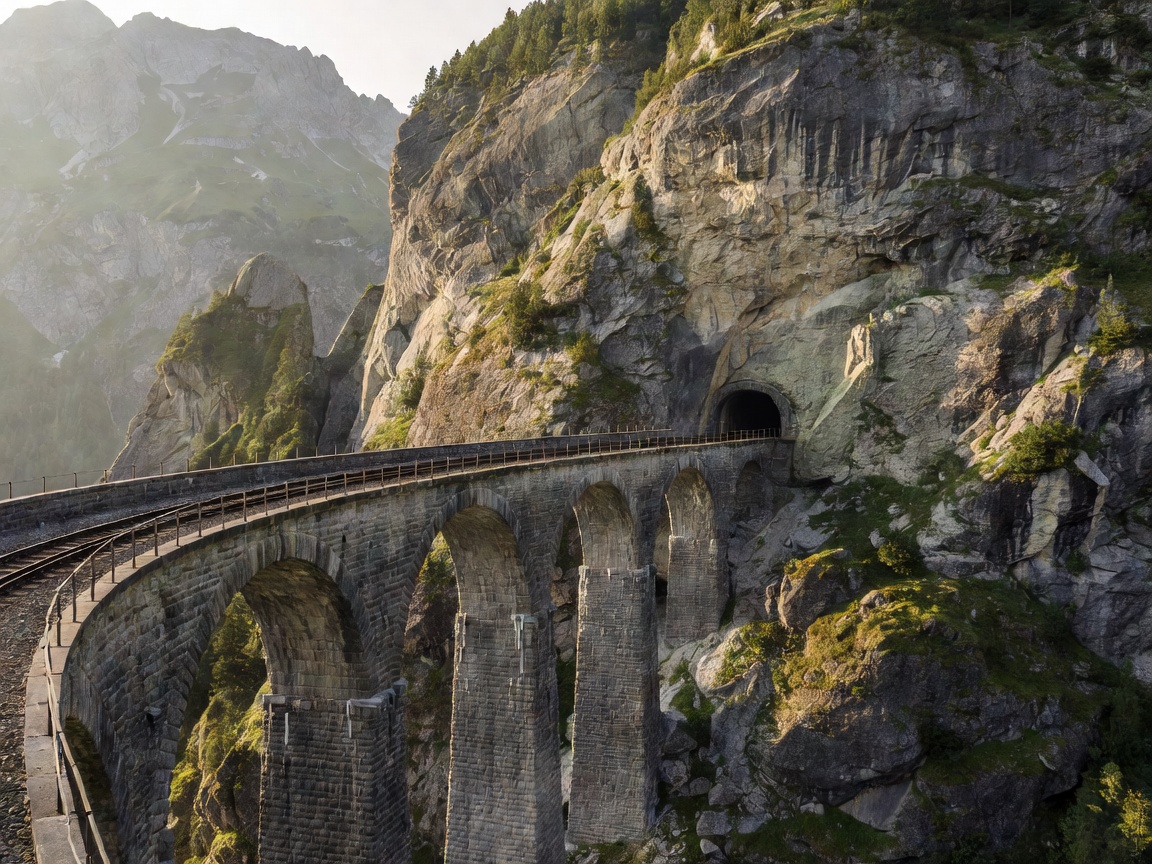
Route Breakdown: Glacier Express (Zermatt to St. Moritz)
Running roughly 291 kilometres over eight hours, the Glacier Express is famously titled the slowest express train in the world. The line traverses three distinct cantons—Valais, Uri, and Graubünden—crossing 291 bridges and traversing 91 tunnels.
Key side-view vantage points along this axis include:
- Mattertal Departure: Exiting Zermatt, looking backwards toward the Weisshorn ridge as the cogwheel descends the tight Mattervispa canyon.
- Oberalp Pass (2,033m): The highest point of the line, marked by the tomasee source region of the Rhine River. In winter, this segment cuts through three-metre snow cuts.
- Ruinaulta (Swiss Grand Canyon): Limestone cliffs plunging into the fledgling Rhine River, featuring towering white debris slides created by prehistoric rockslides.
- Albula Line Spiral Tunnels: Helical engineering loops between Preda and Bergün where passengers observe the same village church tower from three completely distinct elevations.
The Bernina Express: From High Glaciers to Italian Palms
Unlike the east-west axis of the Glacier Express, the Bernina Express runs north-to-south, crossing the main alpine watershed without the use of a base summit tunnel. Reaching 2,253 metres at Ospizio Bernina, it represents the highest adhesion rail crossing on the continent, climbing 7% gradients purely via wheel-on-steel friction.
The dramatic landscape shift occurs within ninety minutes: descending from the sub-zero ice tongue of the Morteratsch and Palü glaciers down into the temperate palm trees of Tirano, Italy at 429 metres. The circular Brusio Viaduct serves as the geometric climax of this transition, looping the train through 360 degrees to scrub altitude within a narrow agricultural basin.
Strategic Seating & Side-View Recommendations
Because trains twist and corkscrew through spiral loops, both sides of the train inevitably encounter breathtaking scenes. However, directional biases remain consistent:
- On the Glacier Express (Eastbound: Zermatt to St. Moritz): The right-hand side (facing forward) offers prime sightlines of the Matterhorn during departure, better exposure through the Rhône Valley floor, and ideal positioning along the Landwasser Viaduct curve.
- On the Bernina Express (Southbound: Chur to Tirano): The right-hand side commands unobstructed vistas across the Lago Bianco reservoir, the Cambrena glacier waterfall drop, and the Alp Grüm lookout terrace down into Val Poschiavo.