The High-Altitude Zermatt Basin
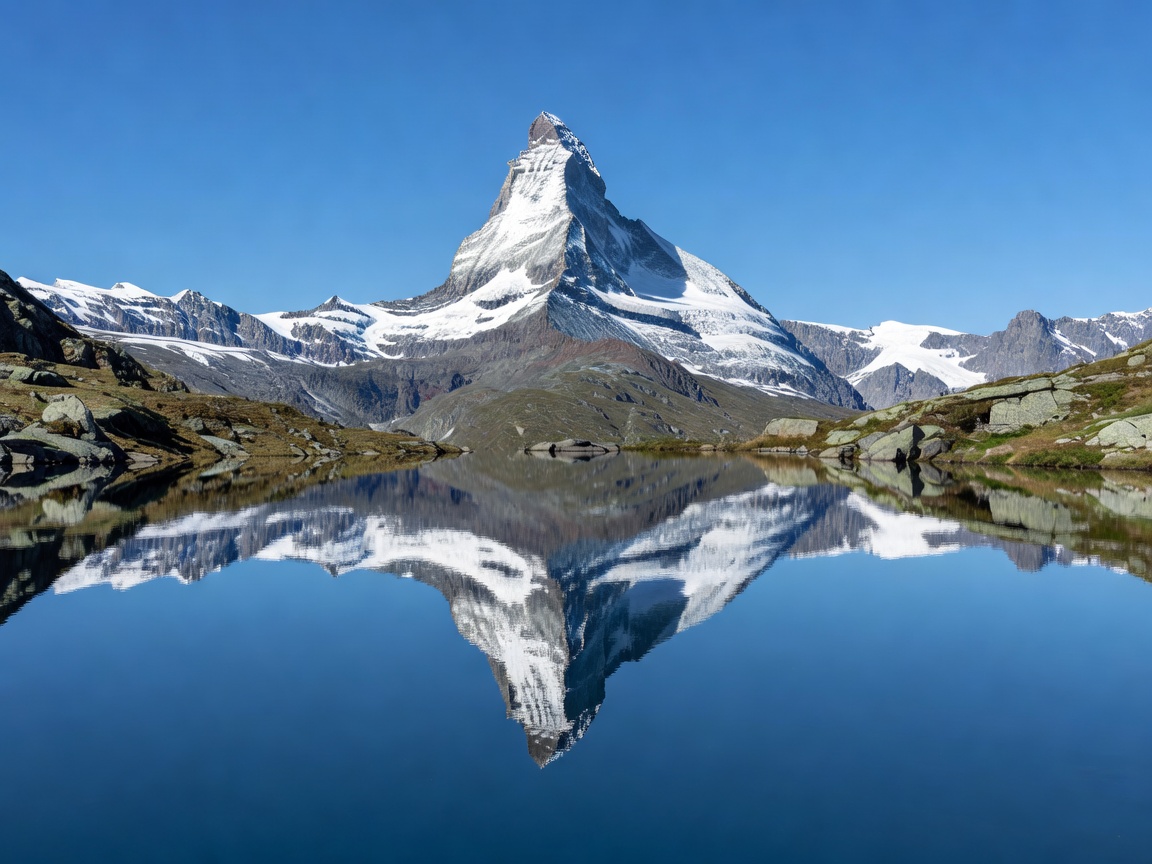
The town of Zermatt (1,608m) in southern Valais sits at the terminus of the Matter Valley. Isolated from private combustion automobile traffic, the resort is anchored by the pyramidal obelisk of the Matterhorn (4,478m). Because of the peak's standalone isolation, viewing lines differ radically depending on whether one observes from the eastern ridge (Gornergrat) or the southern glaciated massifs (Klein Matterhorn).
Observing high-altitude terrain at elevations approaching 4,000 metres introduces acute meteorological dynamics. Atmospheric pressure drops by roughly 40 percent relative to sea level, creating razor-sharp horizon clarity with deep indigo skies and minimal atmospheric scattering.
Gornergrat Railway: 125 Years of Electric Cogwheel Transit
Opened in 1898 as Switzerland's first fully electrified cogwheel railway, the Gornergrat Bahn climbs 1,485 vertical metres over 9.3 kilometres to terminate at 3,089 metres. The route crosses dramatic stone viaducts (including the Findelbach viaduct) and passes through fragrant stone-pine forests before entering barren glacial moraines.
The panorama from the Gornergrat viewing platform is not limited to the Matterhorn. The platform overlooks the Gorner Glacier (Gornergletscher)—the second largest glacial system in the Alps—and offers an unobstructed front-row line-of-sight toward the Monte Rosa massif, including the Dufourspitze (4,634m, the highest point in Switzerland), the Liskamm, and the twin peaks of Castor and Pollux.
Matterhorn Glacier Paradise & The 3S Cableway
For those seeking maximum elevation, the Matterhorn Glacier Paradise station on the Klein Matterhorn represents Europe’s highest cable-car mountain terminus at 3,883 metres. Reached via the state-of-the-art tricable gondola system (3S), the lift spans massive unsupported aerial cables across glaciated crevasses between Trockener Steg and the peak.
The 360-degree viewing platform at 3,883m places the observer into true glaciated high-alpine territory. In clear conditions, the side-view reaches across international boundaries: looking south toward the Italian plains of Piedmont and the Gran Paradiso, and north toward the Jungfrau massif. The Matterhorn itself appears from this vantage point as a sharp, sheer crag of rock rather than the classic isolated pyramid seen from the village.
Riffelsee Reflection & Seasonal Light Cycles
For photographic and observation purists, the lighting angles on the Matterhorn follow predictable daily trajectories:
- Sunrise / Early Morning: The first rays of daylight illuminate the sharp northern and eastern faces in vivid alpine glow (Alpenglühen). Morning is also the sole window when wind speeds are low enough for mirror reflections on the Riffelsee alpine tarn.
- Midday: Direct overhead illumination flattens rock detail on the Hörnli ridge, but opens deep visibility into crevasses along the Gorner Glacier tongue.
- Late Afternoon: Western backlighting creates dramatic rim contours along the Zmutt ridge, though cloud plumes commonly form around the summit pyramid between 14:00 and 17:00 due to thermal updrafts.